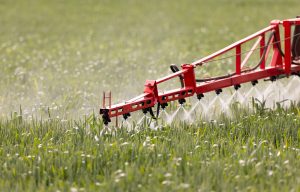
Without a properly balanced emulsifier package the formulation can suffer coalescence, phase separation, creaming, or crystallization of the active ingredient. In the field these problems show up as poor spray coverage, nozzle blockages, and inconsistent pest or disease control.
What an emulsifier actually does
Emulsifiers are amphiphilic molecules, or carefully engineered blends of such molecules, that lower the interfacial tension between the oil and water phases and form a protective film around the dispersed droplets. Stabilization can be electrostatic (driven by ionic surfactants), steric (provided by nonionic polymeric chains), or a combination of both.
Key performance expectations for agrochemical emulsifiers include:
-
Rapid and complete spontaneous emulsification upon dilution with water
-
Good tolerance of hard water and temperature extremes typical of US growing regions
-
Chemical inertness toward the active ingredient and other formulants
-
Secondary benefits such as control of droplet-size distribution during spraying and improved leaf wetting (built-in adjuvant effect)
HLB and practical selection
Griffin’s hydrophilic–lipophilic balance (HLB) scale is still a useful first filter. Most successful agro emulsifier systems target an overall HLB somewhere between 7 and 17. Blends that combine a low-HLB component with a high-HLB component almost always outperform single emulsifiers, because the ratio can be fine-tuned to match the specific oil phase and active.
For ionic or structurally complex molecules the Davies group-contribution method usually gives a more accurate HLB estimate. Ultimately, laboratory evaluation—emulsion stability tests, particle-size analysis after dilution, and accelerated storage—remains the decisive step.
Chemical families commonly used by US formulators include:
-
Alkoxylated fatty alcohols and fatty acids
-
Sulfated or phosphated alkoxylates that deliver electrosteric stabilization
-
Castor-oil ethoxylates, valued for their branched structure and performance in oil-based systems
-
Sorbitan esters and the corresponding polysorbates
-
EO/PO block copolymers of appropriate molecular weight and HLB
Vegetable-oil-derived emulsifiers are gaining share whenever biodegradability and a favorable environmental profile are priorities. When the active ingredient has limited water solubility, compatibility with crystallization inhibitors must also be verified.
A well-designed emulsifier system does far more than keep the concentrate from separating on the warehouse shelf. It improves the quality of the spray cloud, enhances coverage of the target canopy, and can even facilitate cuticle penetration of systemic actives—ultimately delivering better biological results at the same or lower active rates.

 Laboratory services